One person
A resident keeps the same identity when authorizing entry, receiving a charge, filing an appeal, or checking an account balance.
A new category for private communities
An ERP for private and gated communities that integrates administration, accounting, access control, people and devices. Local operations and the cloud share a single source of data.
One shared source
People, units, companies, and providers—including the security company and its personnel—along with vehicles, documents, and governing bodies such as the Board of Directors, statutory auditors, and the various committees retain their identity and relationships throughout every operating, administrative, and financial process.
A resident keeps the same identity when authorizing entry, receiving a charge, filing an appeal, or checking an account balance.
A lot or unit connects owners, tenants, authorizations, services, assessments, violations, and financial movements.
Company records, employees, insurance, access, purchasing, invoices, obligations, and payments belong to the same organization.
Technology pillars
The four pillars are not marketing labels: they define how SK ONE solves operations. Cloud coordinates data and configuration; IoT connects the physical territory; Mobile brings the experience to every user; AI interprets, recommends, and automates tasks across several modules.
Central configuration for each community, permissions, notifications, AI models, analytics, and operational governance.
Access events, devices, readers, physical signals, and validations born in local infrastructure.
Daily experience for authorizations, credentials, reservations, documents, alerts, and services.
Assistants, document analysis, guided configuration, WhatsApp questions, and contextual automation.
Connected processes
A need, entry, measurement, document, or service can move across rules, approvals, and teams without rebuilding data or losing traceability.
A physical event, request, or document starts the process using identities the platform already knows.
Permissions, owners, validity periods, limits, and approvals determine how it continues.
The event can become a charge, obligation, payment, collection, or accounting movement.
Origin, evidence, owners, documents, and decisions remain connected from end to end.
Integrated on-site operations
Access, guards, authorizations, cameras, devices, speed enforcement, violations, reservations, and mailroom operations stop being peripheral information and connect with the administrative reality.
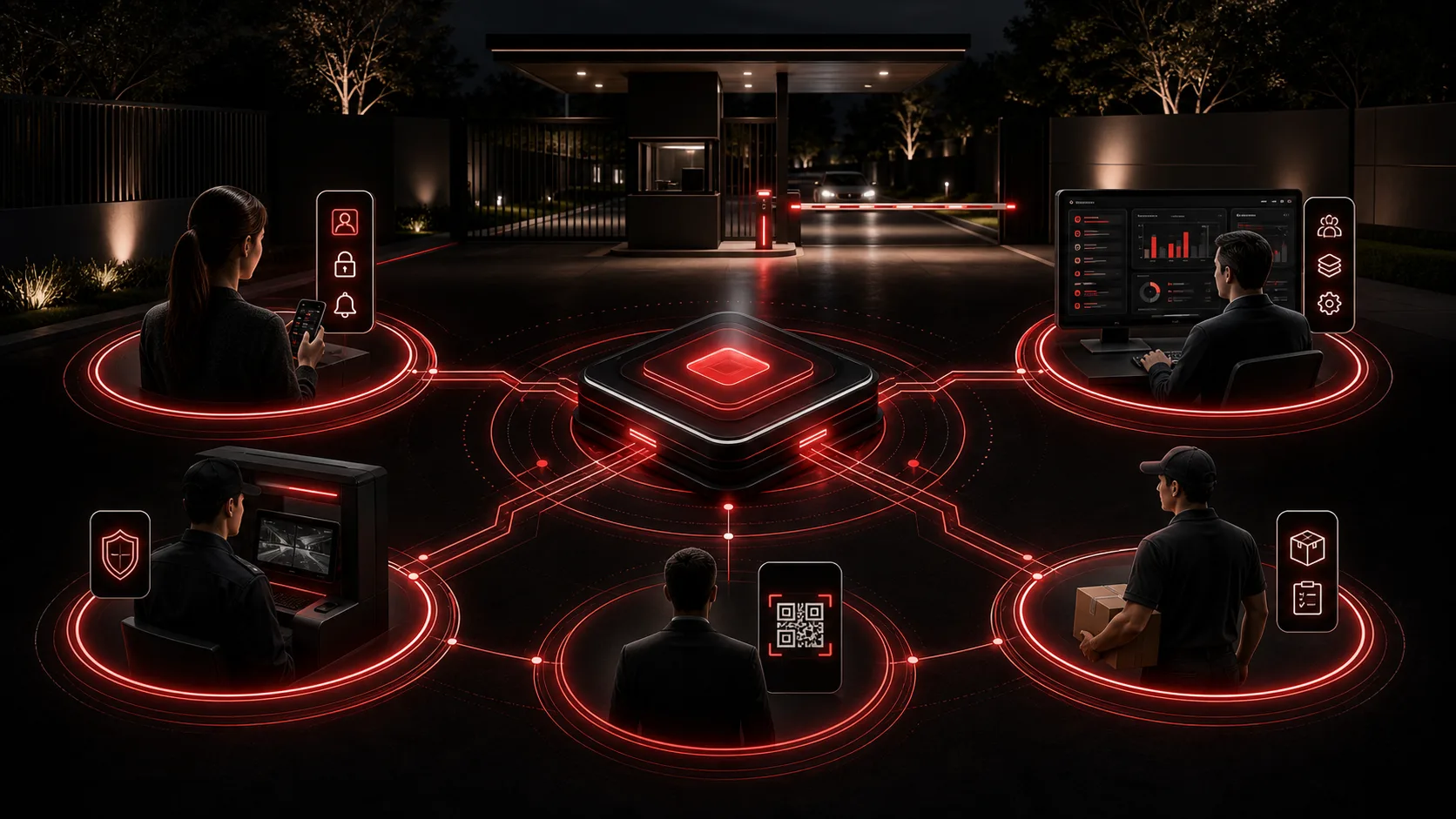
Physical events can continue through administrative and financial processes without switching platforms.
Devices connect their signals to people, units, rules, and consequences.
Residents, employees, providers, visitors, and external subscribers use apps and self-service channels.
Vertical specialization
Units, people, providers, funds, facilities, security, devices, services, and governing bodies coexist as native entities on one platform.
See SK ONE in actionAssessments, lots, authorizations, amenities, violations, providers, and boards are native entities.
Purchasing, treasury, collections, budgets, and accounting share context with daily operations.
Each community can begin with its priorities without creating new information silos.